Educational Guide
Shell sizes, translated for planners.
What professional shell diameters actually mean for the look, the sound, and the space a display needs.
Shell diameter drives break height, break diameter, and — critically — the safety distance a display needs downrange. Larger shells demand more open space, more clearance, and more coordination. Show scale, venue constraints, weather, local approvals, and show design together determine what's appropriate for any given event.
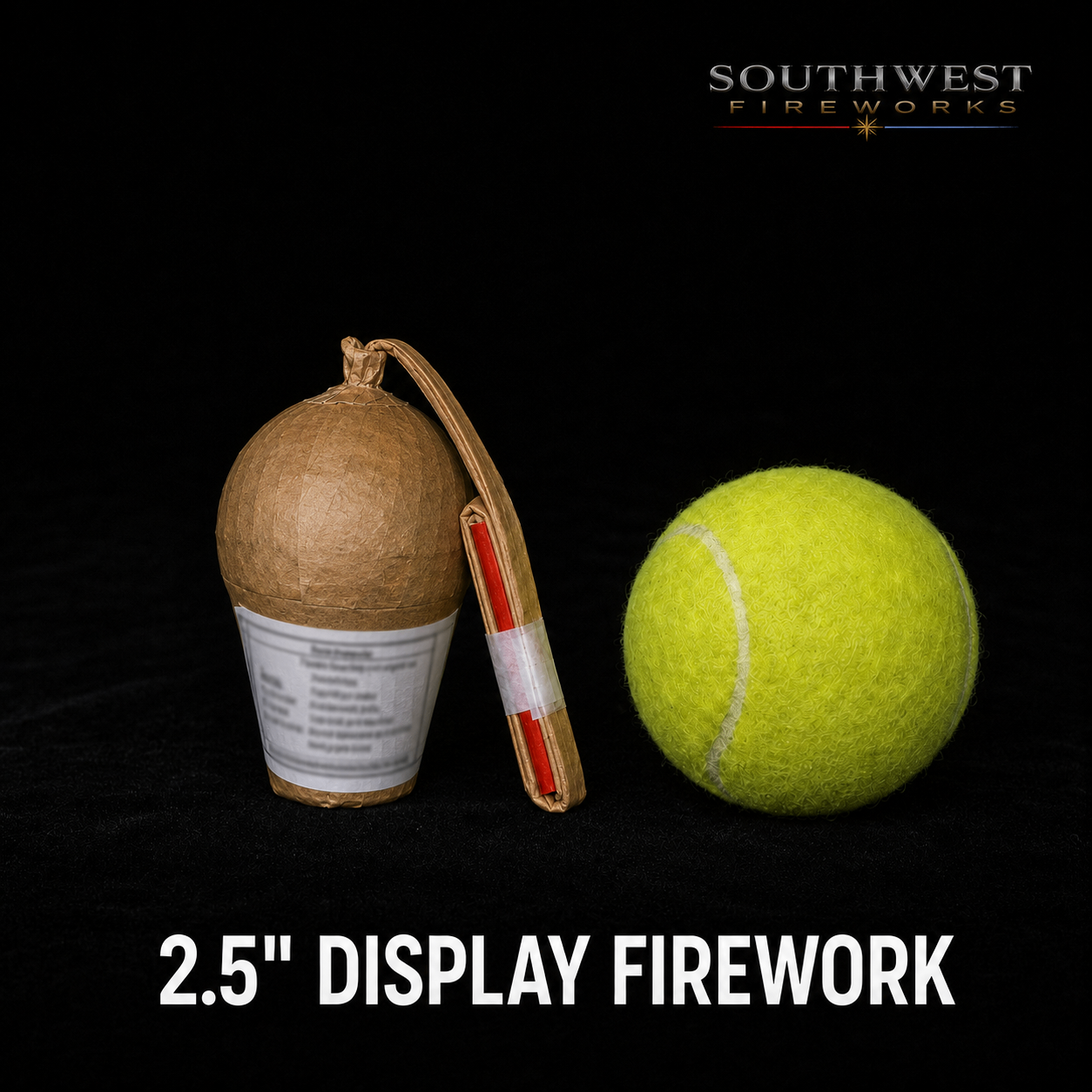
2.5"
Aerial shell- Break height
- Low
- Break diameter
- Compact
Close-proximity moments and tight venues where sightlines and safety distances are limited.
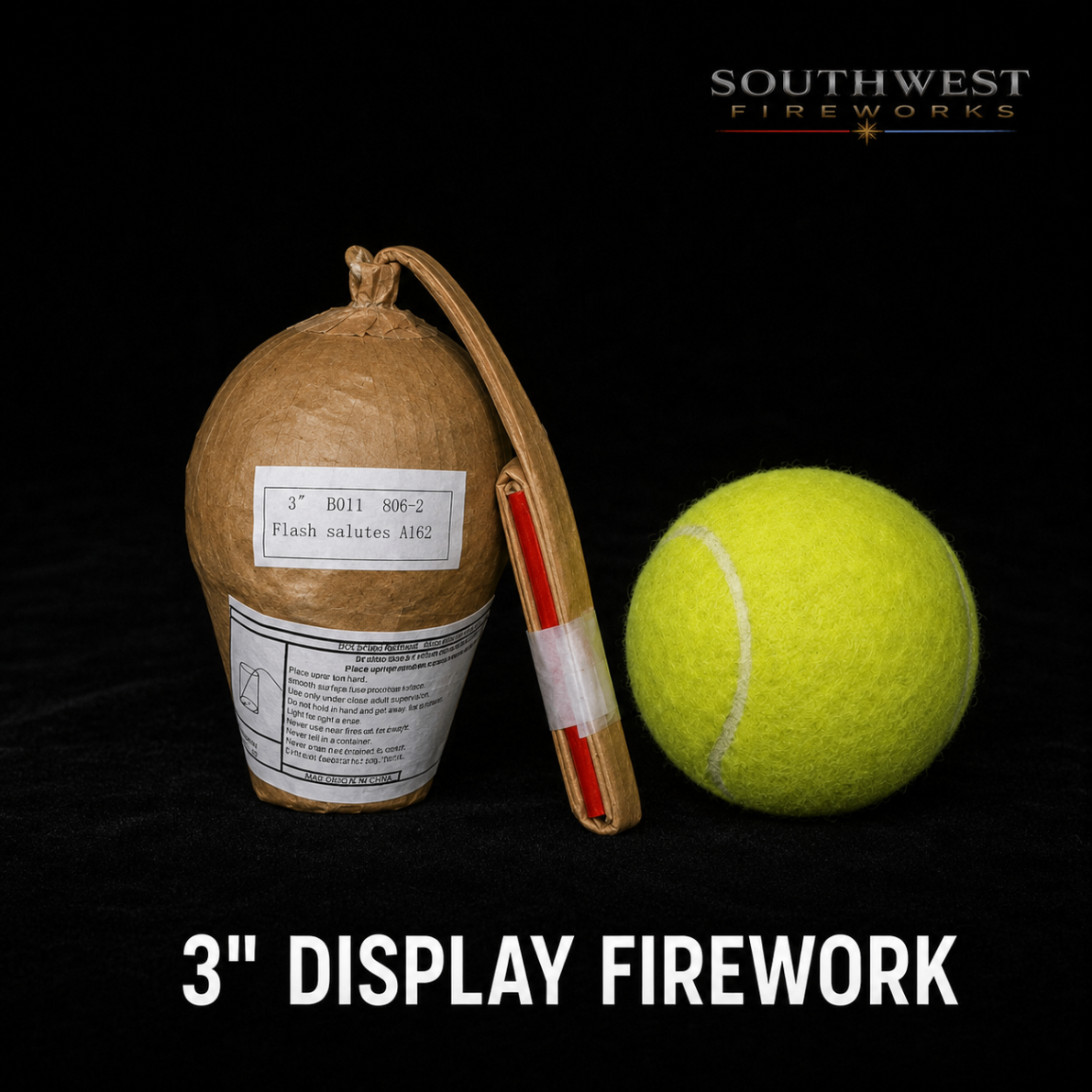
3"
Aerial shell- Break height
- Low–Mid
- Break diameter
- Small
Smaller neighborhood and community events with modest clearance.
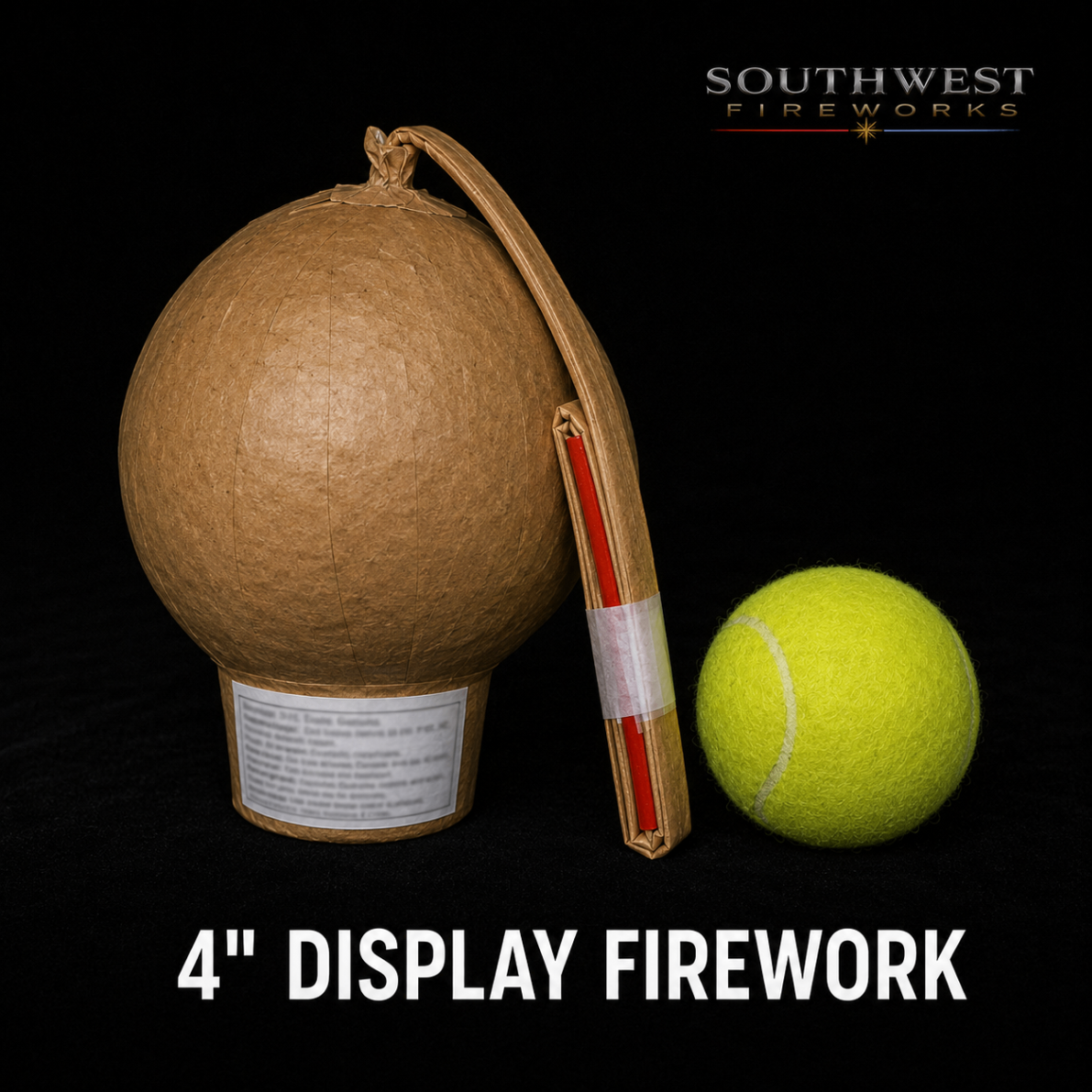
4"
Aerial shell- Break height
- Mid
- Break diameter
- Moderate
Community celebrations with adequate open space downrange.
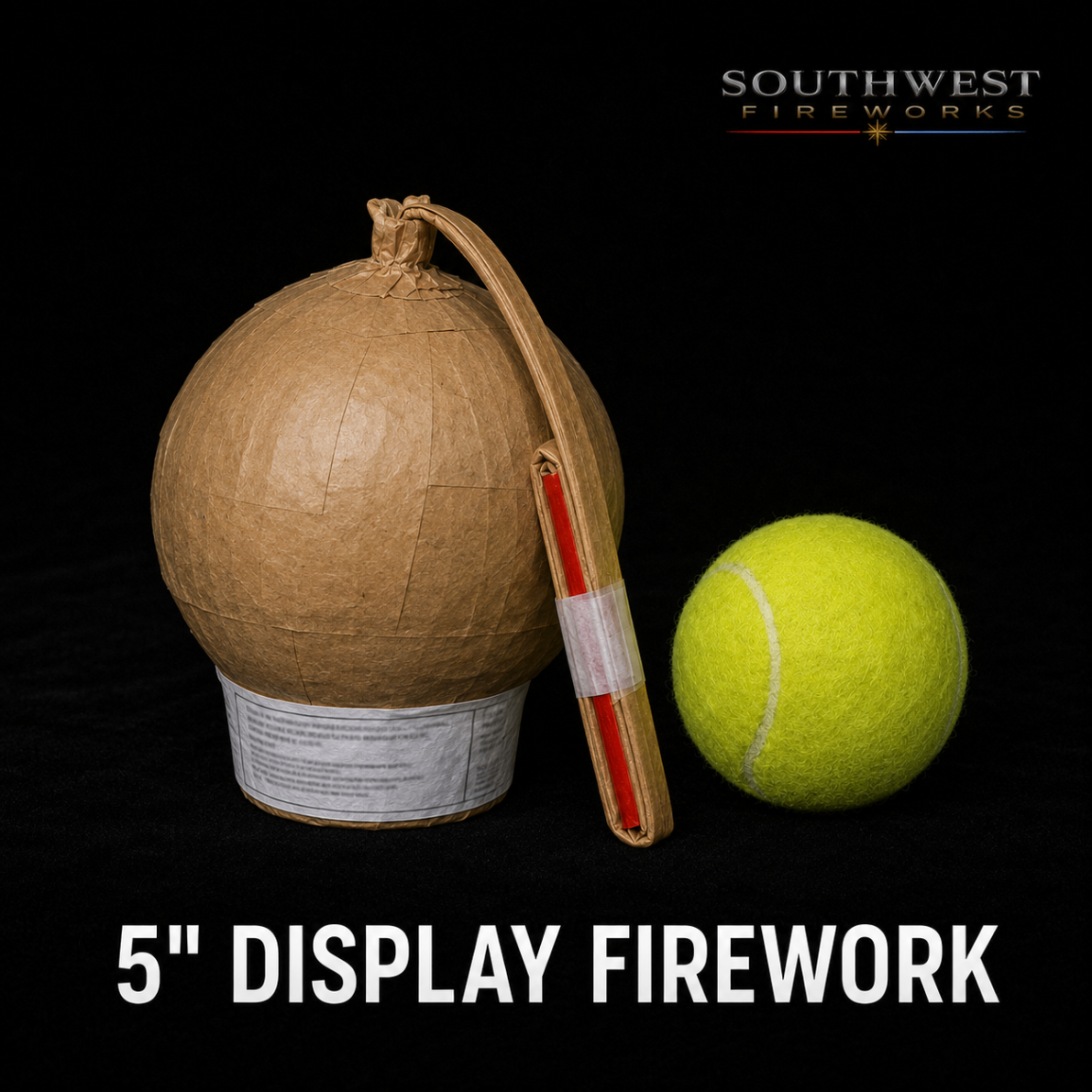
5"
Aerial shell- Break height
- Mid–High
- Break diameter
- Large
A common workhorse for public celebrations at venues with room to breathe.
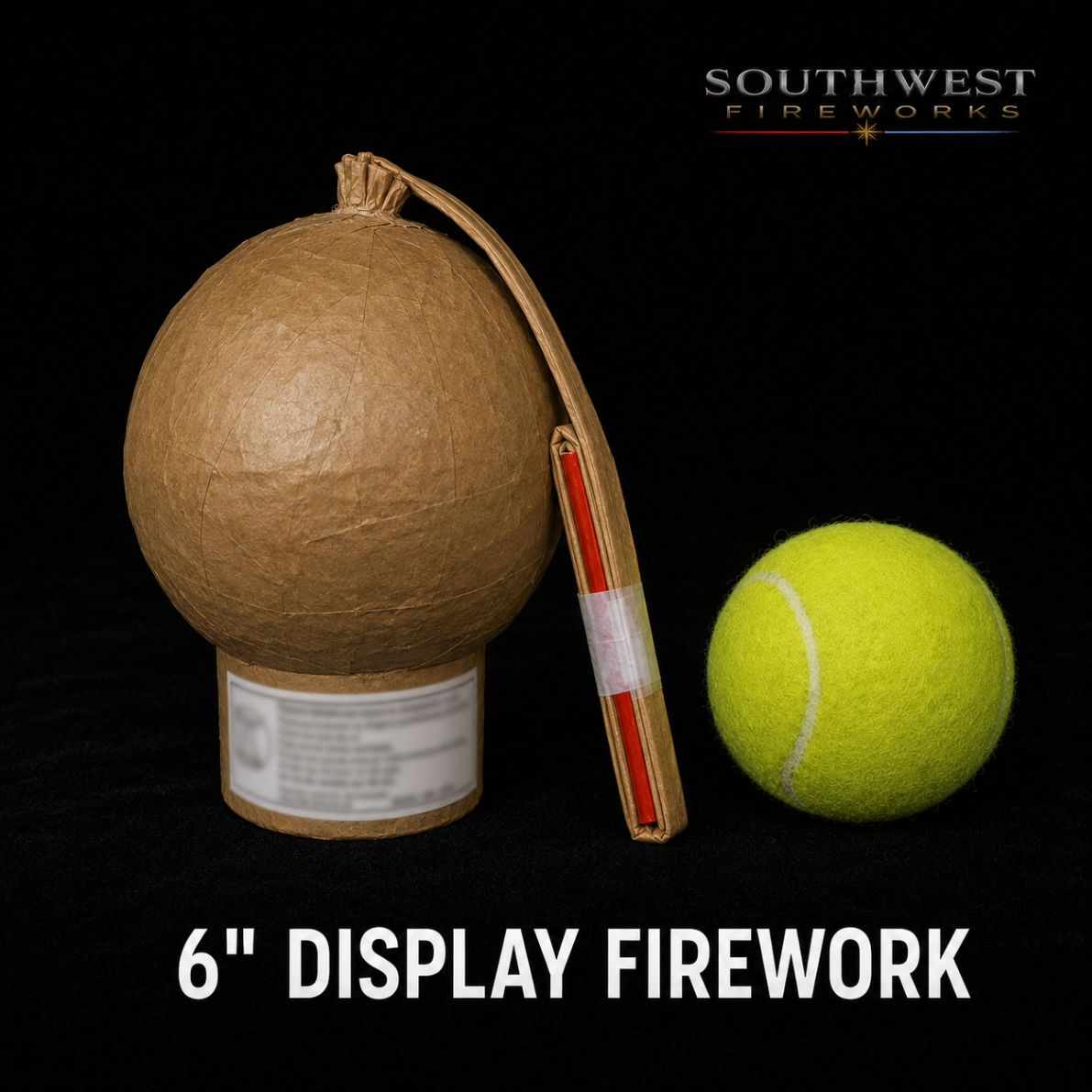
6"
Aerial shell- Break height
- High
- Break diameter
- Larger
Festival- and destination-scale moments at venues with significant clearance.
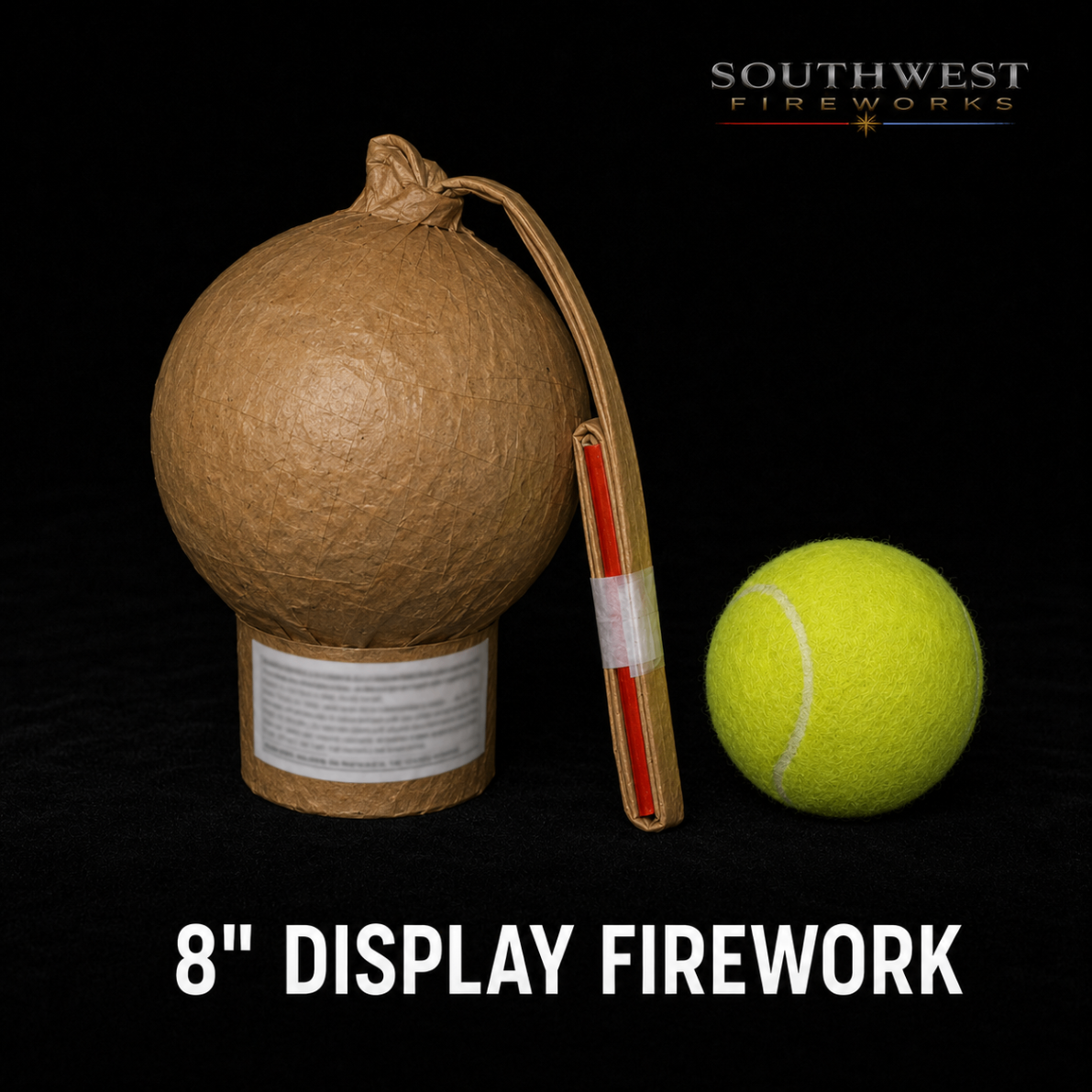
8"
Aerial shell- Break height
- Very High
- Break diameter
- Very Large
Headline breaks reserved for venues with the geometry and approvals to support them.
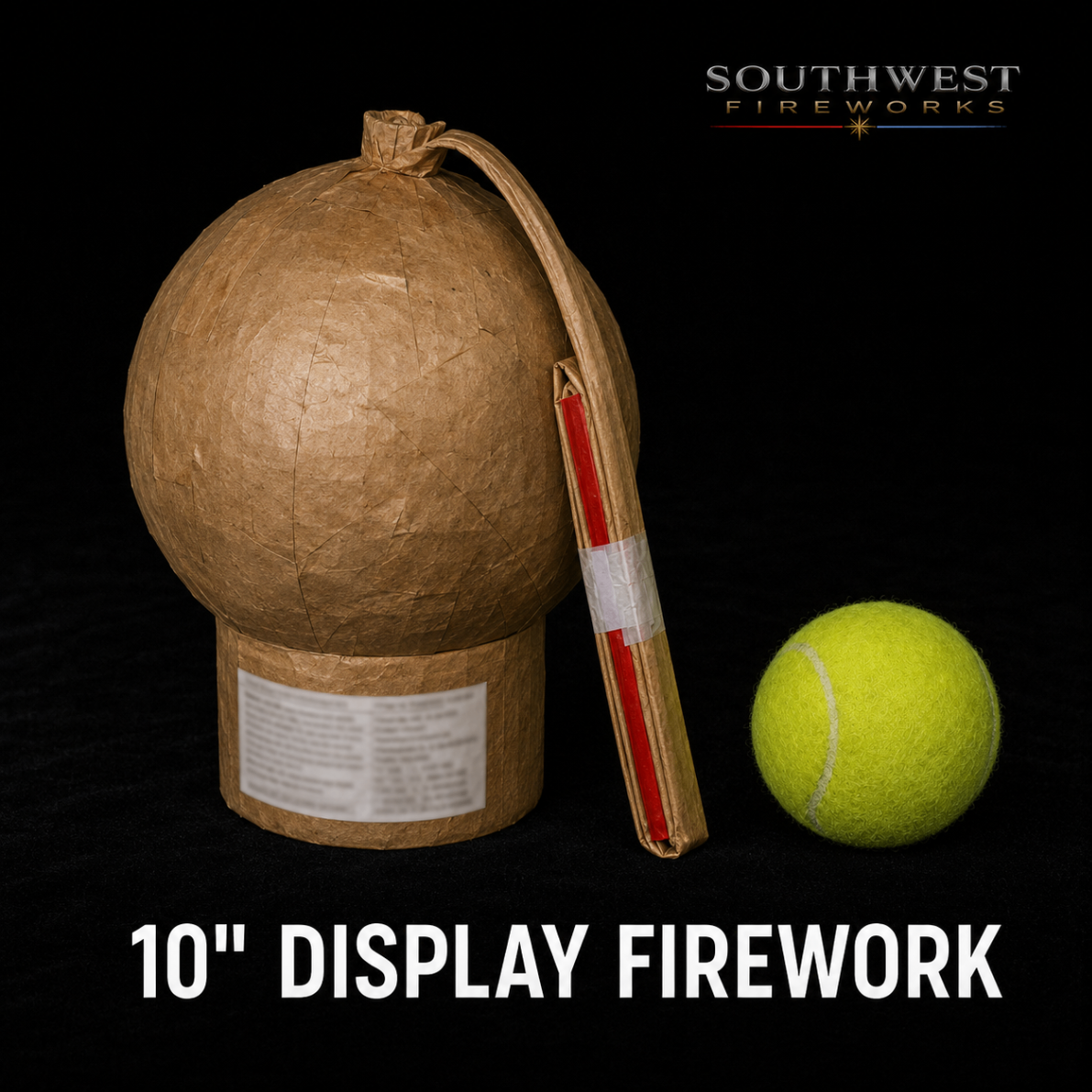
10"
Aerial shell- Break height
- Very High
- Break diameter
- Very Large
Regional-scale displays at large public venues with extensive downrange clearance and coordinated approvals.
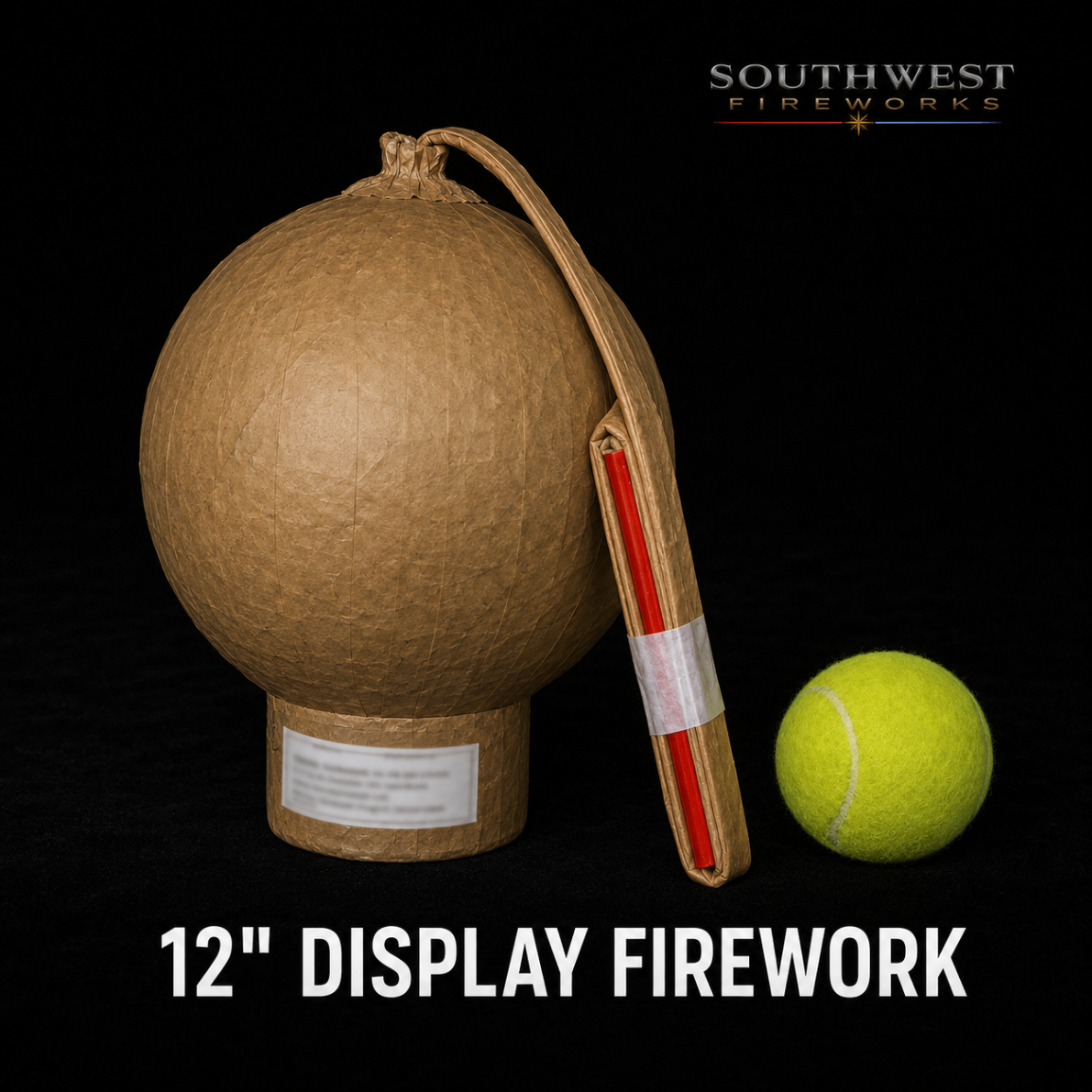
12"
Aerial shell- Break height
- Very High
- Break diameter
- Very Large
Major festival and destination events where site geometry, safety distances, and authority coordination allow for larger effects.
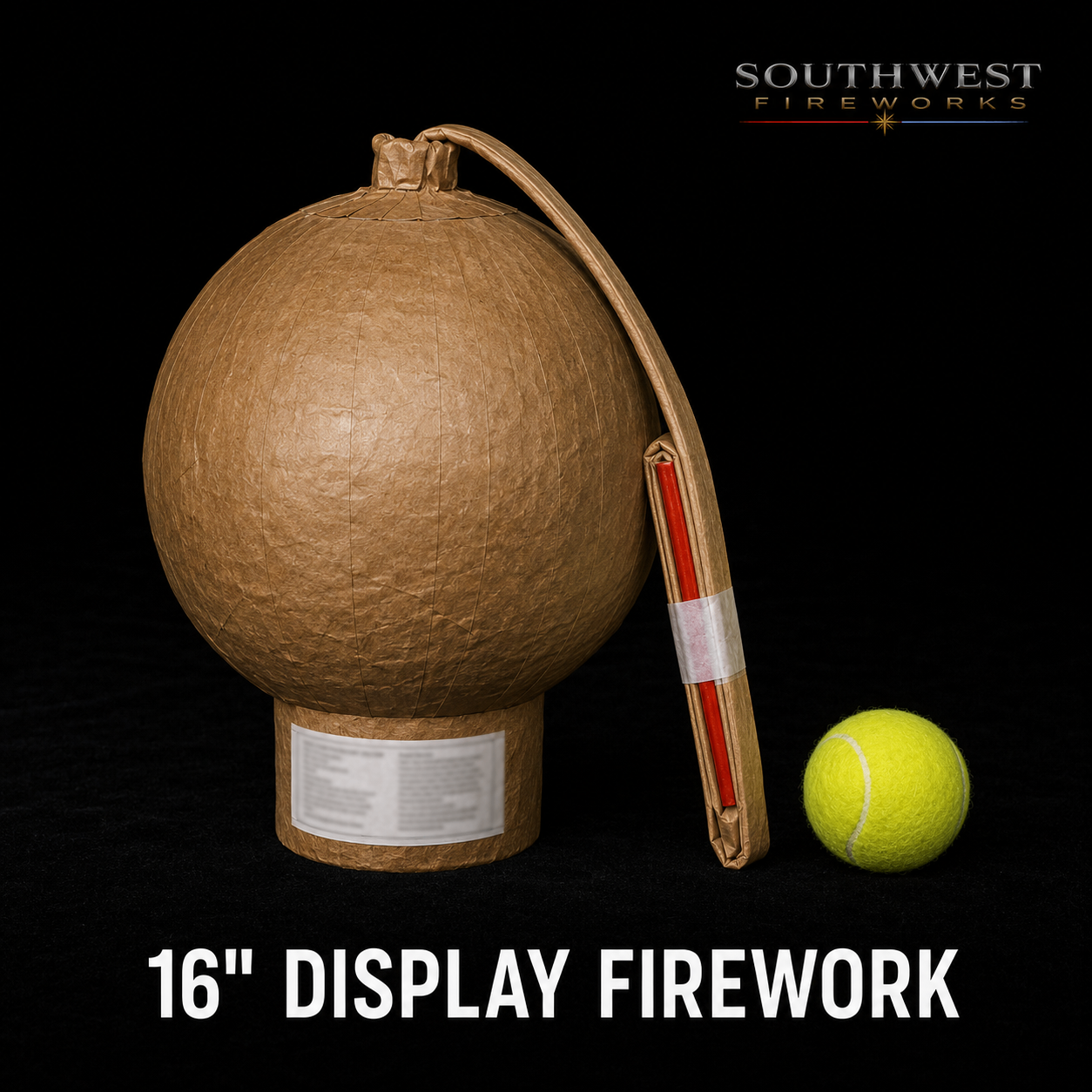
16"
Aerial shell- Break height
- Extremely High
- Break diameter
- Massive
Among the largest shells used in outdoor displays; reserved for sites with substantial open space and advanced planning.
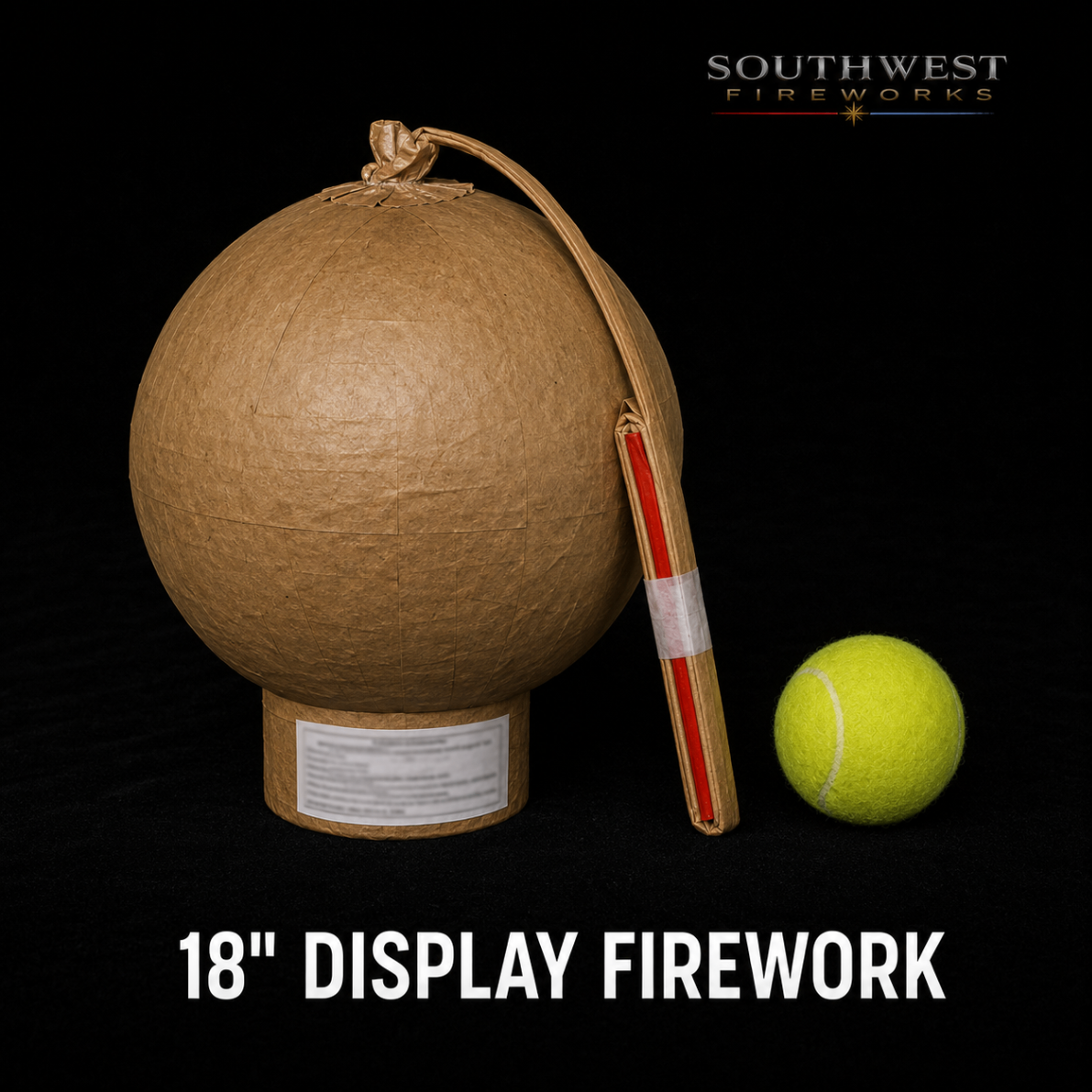
18"
Aerial shell- Break height
- Extremely High
- Break diameter
- Massive
The largest class of aerial shells for major productions, requiring significant site geometry, safety planning, and regulatory coordination.
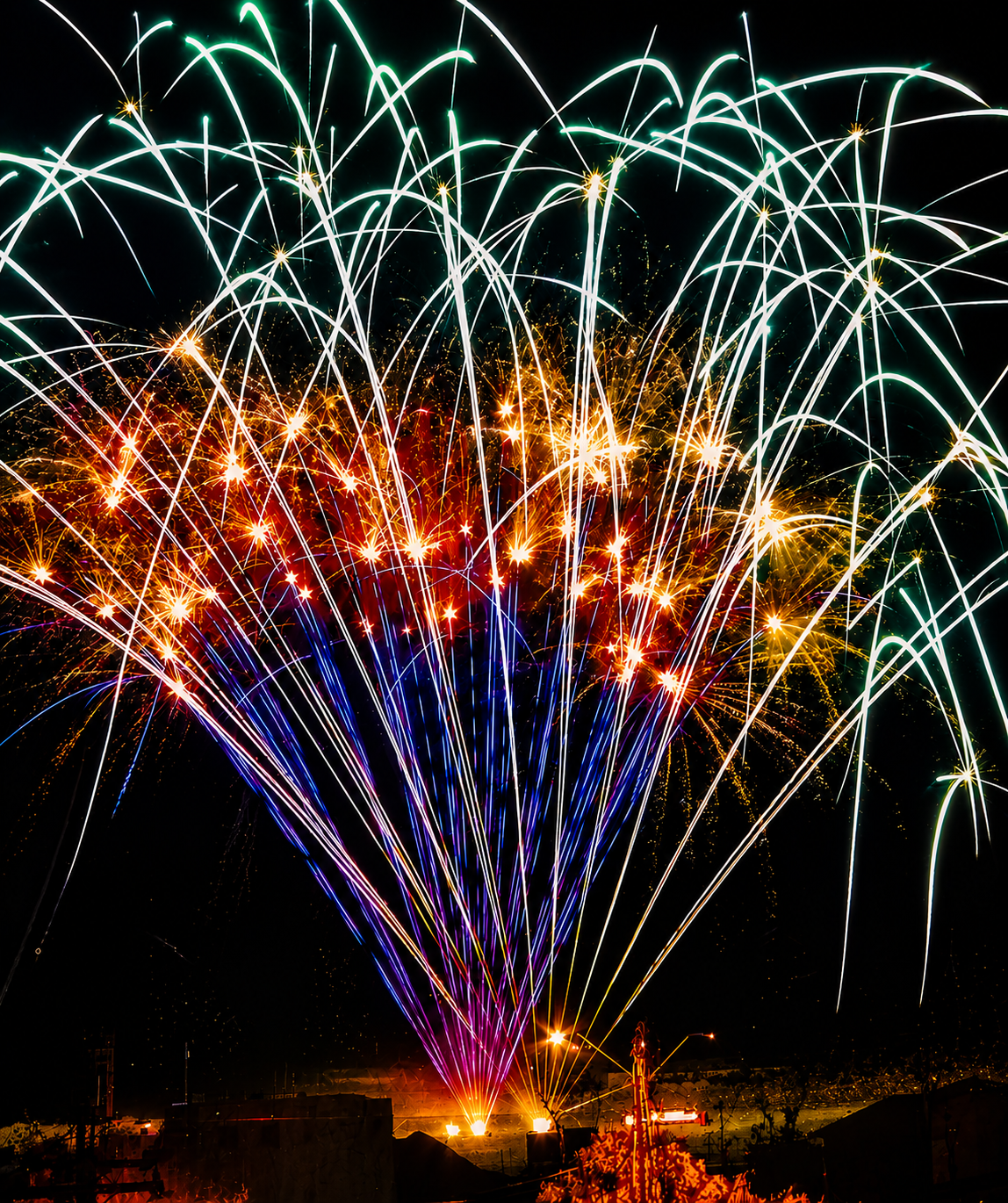
0.5″ – 3″
Cake assemblies- Altitude
- Low–Mid
- Spread
- Focused to wide fan
Multi-shot cakes fire rapid sequences of smaller effects to build pace, add texture, and complement larger shells. Compact 0.5″ cakes suit intimate venues; 2″–3″ cakes bring energy to community and municipal shows where clearance allows.
The specific shell sizes suitable for your event depend on venue geometry, applicable safety distances, weather planning, and the approvals granted for that show. We'll walk through what's realistic for your location during discovery.
NFPA 1123: 70 feet of radius per inch of shell diameter
NFPA 1123, Code for Fireworks Display, is the National Fire Protection Association standard adopted by most Authorities Having Jurisdiction (AHJs) across the United States for outdoor aerial displays. It establishes the minimum separation between the mortar discharge area and spectators, structures, and other protected exposures.
The core sizing rule: the minimum radius of the display site is 70 feet for every inch of the largest aerial shell to be fired (NFPA 1123, Chapter 5). That radius applies in every direction from the mortar placement — not just toward the audience.
| Largest shell | Minimum site radius | Minimum site diameter |
|---|---|---|
| 3 in | 210 ft | 420 ft |
| 4 in | 280 ft | 560 ft |
| 5 in | 350 ft | 700 ft |
| 6 in | 420 ft | 840 ft |
| 8 in | 560 ft | 1,120 ft |
| 10 in | 700 ft | 1,400 ft |
| 12 in | 840 ft | 1,680 ft |
| 16 in | 1,120 ft | 2,240 ft |
| 18 in | 1,260 ft | 2,520 ft |
Distances above are the NFPA 1123 minimums. The AHJ can require greater separation based on site conditions, wind, adjacent hazards, or local ordinance. Low-break and ground-based effects follow separate provisions within the same standard.
Source: NFPA 1123, Code for Fireworks Display — nfpa.org/1123. Always confirm current edition and any local amendments with your AHJ.